
Please read these questions first as they directly relate to product solutions you might want to choose.
Top 14 questions
If you have other questions, then please ask us for more information. These questions and answers may be helpful before reading further through our website.
What is our mission?
Our mission is simple.
We see the democratisation of energy as a human right.
For 140 years, large industry players and Governments have harvested Trillions of dollars/euros/pounds in profits and taxation by renting energy to everybody in a highly inefficient and wasteful method.
We buy our homes because we see rent as dead money, so why should we be forced to rent our energy as well.
In a standard detached house with two cars which travel 8,500 miles (13,600kms) per year each, typical heating bill of €2,000 and Electricity bill of €100 a month, you will spend €333,028 on renting your energy over the lifetime of a 30-year mortgage excluding all maintenance, replacements, etc. This spending may even be bigger than the original mortgage itself.
Over 50 years, you will have spent €734,875 renting your energy. If your house is larger than a typical 1,400 sqft home, and your bills are bigger, then you can see how much money you are wasting on renting your energy.
Until recently, it was difficult to pull away from these centralised systems, but that has all changed; the technology is here, is being deployed, and we can deliver every facet of those solutions (and already have).
Investing in your own energy systems professionally is a no brainer, but don’t rush into it; get a properly designed solution. Please be assured that this solution won’t arrive in your kitchen wearing a suit looking for you to write a cheque on the day. !!
Where do you ship product/systems to?
We ship systems all over the world.
We can ship fully designed individual solutions for individual projects or large scale panel shipments from our manufacturing site to distribution partners.
Contact us to see about adding our solutions to your distribution.
How many countries are HONE systems are installed?
Thousands of HONE systems are installed in over 25 countries, from Canada to New Zealand, growing each day.
These range from new and retrofit residential projects, commercial projects like Hotels & Leisure centres to large scale Government commercial projects such as Hospitals and Municipal Leisure centres, with customers like the UK Government NHS and Dutch Municipal Government as examples.
HONE also powers Ireland’s & Europe’s best Government Energy Rated home, which has zero energy bills and charges 4 electric cars for free.
This home has the first private grid in Ireland, something that will become very common as people opt for a private grid over the public grid and stop renting their energy as it is dead money, just like renting a house.
(This may be the world’s best energy rated home, but only that data is available in the EU for now)
I am an installer, is there specialist training needed?
No specialist training is needed. You follow the instruction manuals with pictures and diagrams.
The installation of these technologies is pretty standard practice these days if you install heat pumps, solar hot water or solar PV. HONE systems are slightly simpler to install than legacy systems with fewer parts as they are all high-end plug and play where possible.
As in most countries where grants or other supports are available, there are processes to be followed.
Otherwise, this is standard mechanical and electrical works.
In a new build project, the existing plumbing & electrical contractor installs as part of their overall installation; no specialist installers are needed.
In residential, follow the standard design protocols, and in commercial systems, there will be a design process as those installations are usually a little more bespoke.
You can always contact us for support before, during and after an installation.
How do I know which solution is ideal for my project?
Contact us, and we will help you design the correct option for your exact needs.
You can start by looking at the information below.
Then check out the case studies and look for the technical case study examples with EPC data. There are residential and commercial examples.
If someone tries to sell you a one size fits all solution, it clearly won’t be designed for your situation but designed so a salesperson can sell you something quickly without you complicating the sale.
Take your time, no rush, it’s a big decision; get it right and invest your money wisely.
How do I progress commercial & large residential projects?
Large residential (developments) are the same as a one-off new build; it’s all about compliance and cost management. HONE delivers the lowest construction cost and exceeds either nZEB or Net Zero compliance, and we can demonstrate that fairly easily.
Larger commercial systems or non-residential projects will need scoping out so you can contact us directly.
Contact us directly on these projects to explore and sope them out for you.
Why do you have a lot of high level technical information for the UK & Ireland markets only?
Whilst we are a manufacturer and primarily supply distribution and other market partners, we actually own our own distribution companies in the UK & Ireland and, as such, have a different level of market support in those markets.
Do you partner with developers on large projects?
Yes, we do.
We also work very closely in addition to the supply chain, including checking ongoing compliance before shipping against expected SAP and DEAP outcomes.
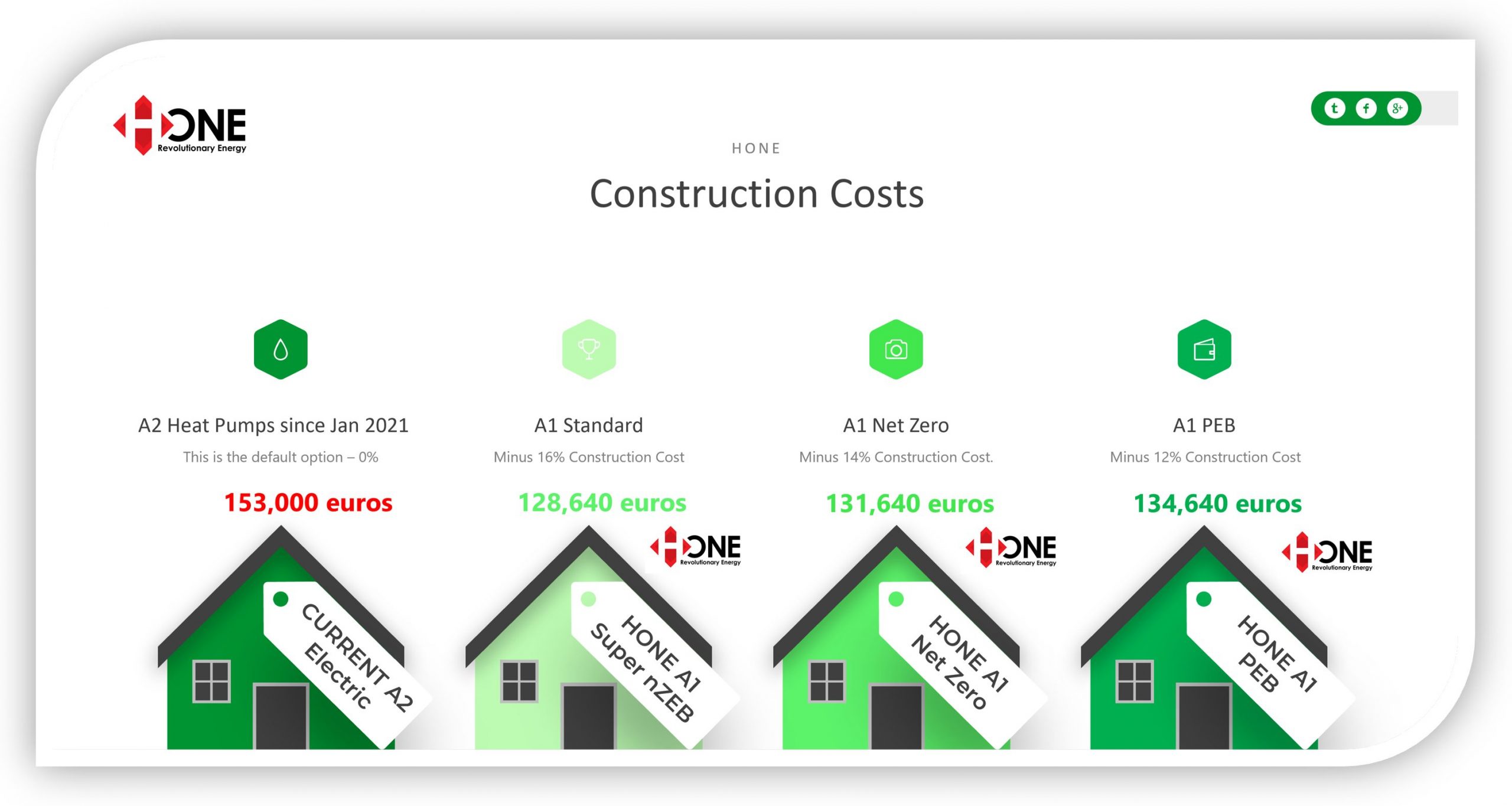
We can deliver construction savings of €250 per sqm for a HONE A1 Super nZEB versus A2 heat pumps installs. The home will also have 80%-90% lower energy bills per year for the homeowner.
Send us your provisional DEAP information for each type, and we will model it for you.
Can you design a project to give a specific energy rating, let's say I want to get my home into the top 10 in the country?
Absolutely.
You have just described what we do best.
See the case studies for an example of this very situation.
I am building a new house, what do I need to tell my Architect about HONE so he can design it properly?
The application of HONE in a project, whether a residential or commercial new build, is part of the engineering specification. Your Architect will design your building; they will not specify the technical elements to meet regulations or outcomes.
After you have plans completed and agreed upon, you need to get a “provisional energy rating” EPC (DEAP/BER/SAP, etc.) completed on the plans. This will determine what technical specifications you need to meet building regulations.
Each country has different regulations.
You send the provisional EPC calculation, SAP or DEAP (BER) to us, and this is the stage we get involved in residential.
There is a video in the next sections which show you what we need and how to interact with us.
With commercial projects, we get involved from the very beginning.
What comes in a system kit?
A system kit has all the material elements plus smaller parts—Mountings, Panels, Controls, Fittings, Thermal Kit, Electrical Kit, etc.
It is designed to have everything that your local merchant would not have in stock, so they are very comprehensive.
Can I use my existing Solar Hot Water cylinder?
The answer is yes and no.
HONE Thermal and/or Thermal/Electric systems are very powerful, so they need to get this thermal energy out of the system efficiently.
Standard solar hot water cylinders have tiny solar heat transfer coils because traditional solar hot water panels are not that powerful, so they typically have approx. 0.8 sqm surface area in a 300L cylinder.
HONE cylinders have coils approx 3.8 sqm surface area in a HONE 300L cylinder, nearly 5 times bigger.
This ensures an efficient system.
So the answer is you can, but you will create a roadblock for all the energy that HONE can create if you use a basic solar hot water cylinder.
If you already have an existing cylinder, swapping it out is not a challenging task and recommended.
What is the SAP and DEAP data for entering into EPC's?
You can see full case studies on this in the case study section;
HONE Thermal Panels;
(search HONE or Photonomi in DEAP 4.x.x)
- Aperture 0.88 sqm
- n0 – 0.75
- a1 – 2.368
- a2 – 0.000
- Dedicated Solar Volume is 50% of the cylinder size (150L) in a HONE thermal system, and 300L is the standard cylinder size.
- Dimensions: 1.6 sqm – Thermal only Panel.
HONE Thermal/Electric Panels;
Renewable Thermal Inputs
(search HONE or Photonomi in DEAP 4.x.x)
- Aperture 0.88 sqm
- n0 – 0.75
- a1 – 2.368
- a2 – 0.000
- Dedicated Solar Volume is 50% of the cylinder size (150L) in a HONE thermal system, and 300L is the standard cylinder size.
Renewable Electric Inputs
- 100-watt rating per Thermal/Electric panel entered in the normal way.
- Dimensions: 1.6 sqm – Thermal/Electric Panel.
HONE Electric Panels;
- 230-watt rating per Electric only panel entered in the normal way.
- Dimensions: 1.3 sqm – Electric only Panel.
NOTE: Whilst the 230w panel is our default residential and small commercial panel and is suitable for class 1 wind locations such as Ireland and Scotland, we can manufacture panels of any size for commercial projects in class 2, class 3 or class 4 wind locations.
Republic of Ireland NOTE: HONE Systems that fall under the category of Solar Central Heating systems have a bonus Appendix Q kWh calculation that must be done outside of DEAP 4.x.x in an excel spreadsheet and then entered into DEAP manually into the renewable heating additional energy section. Please ask for details as few BER Assessors are familiar with this process.
Is there a reason why building renewables would be different from large scale renewables?
Large-scale renewable projects are absolutely driven solely by cost, so the cheaper, the better, and we all know there are no cheap Rolls Royces.
They also have large tracts of land and don’t have to deliver power across the year or any given time. Each year, it’s a simple model; they produce an amount of power and get paid an agreed price.
Buildings, on the other hand, are completely different. They need energy throughout the whole year, especially in winter. They need that energy to be available when there are energy requirements to fulfil, whether heat or electricity.
Buildings also have constraints in that they have limited space, or the roofs face the wrong direction, so they need the most powerful technologies.
This is why you see such variances in the performance from renewables, especially renewable electricity, where there is no certified annual kWh performance test.
This generally shocks people.
Unlike Solar Thermal technologies certified to produce a certain annual performance in kWhrs per year, there are no such tests for Solar PV panels.
This means if you installed a 3 KW Solar PV system from several different manufacturers, you would have seven different performance levels, so the rule is to get some evidence of data; there are a lot of cheap renewables out there. If you buy cheap, expect lower performance, the renewable industry is no different from any other industry.
Always apply the GOOD-FAST-CHEAP rules when deciding on your renewable route:
- GOOD and CHEAP won’t be FAST
- FAST and GOOD won’t be CHEAP
- CHEAP and FAST won’t be GOOD
ALWAYS ask to see historical performance data, especially in winter; it is your only assurance you are not being sold a panel you really don’t want or isn’t what you think, as your distributor or supplier may not actually know which panel type they are handling, just as much as you don’t.

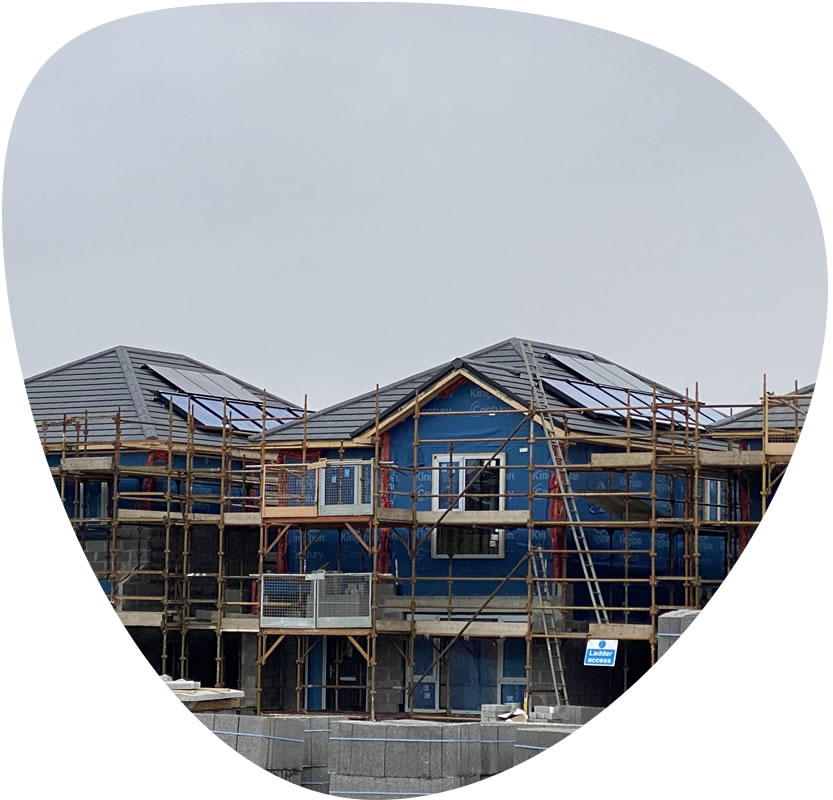
New Build Residential
This is a simple explanation of what HONE technology means to new build residential projects.
What is a HONE new build nZEB system?
What we need from you
Case Studies
Please read the information in all these sections first.
Then, if you are looking for very detailed technical and regulatory information for a new build residential, whether a one-off home or a multi-res development, you can read the technical detail in the Case Study section.
QS Gap Analysis - Construction Costs
Whilst this example is from Ireland, it equally applies in the UK or any other country.
Here is the actual data from a detached house in Dublin, names and location removed.
It shows the QS analysis that the home was €175 per sqm cheaper to construct. The annual heating bill will be €230 as verified by SEAI DEAP software.
The outcome is not a basic A2 nZEB but an A1 Net-Zero. This means the home produces the same amount of energy as it consumes. The house will be worth 20% more in value.
Unlike the heat pump option, where you still have to purchase 100% of your heating, hot water & electricity, the HONE option produces up to 90% of your annual hot water needs, 100% of your electricity with over 22,000 km of free EV charging per year if that suits your lifestyle.
As the HONE system has a design life of 50 years, you would have bought 4 heat pumps in that timeframe, 1 new one and 3 replacements.
Download the financial analysis here. QS-GAP-ANALYSIS-v3.0
Read the SEAI DEAP Dwelling Report here.
Read the SEAI DEAP Part L Report here.
Social & Affordable Housing
HONE is ideal for social and affordable housing with annual heating bills as low as €70 / £60 certified by DEAP and SAP evidence.
Coupled with very low bills, you have virtually no maintenance costs: every 5 years, a fluid service costing approx €300 or £250.
Besides, the installation cost is cheaper than installing heat pumps, and you get a higher energy rating, an A1 Super nZEB in Ireland and up to an A100 Net Zero rating in the UK or better.
Why A1 Super nZEB or A100 versus A2 nZEB or A90?
The primary difference between A1 Super nZEB and A2 nZEB (the same applies to A100 Net Zero and A90) is lower overall energy consumption and emissions per year.
Meeting A1 Super nZEB or A100 Net Zero is easy using HONE systems, and the cost of building your home is lower than with a heat pump which would only achieve an A2 nZEB.
Also, your property will have a higher valuation, and if you are building a housing development, your homes will sell for higher prices.
The better the rating, the lower your bills, future carbon taxes, and the property’s more desirable.
So, where does this extra value come from? It comes from depriving the utilities & government of thousands in income and taxes over the next decades while living in your home or commercial building.
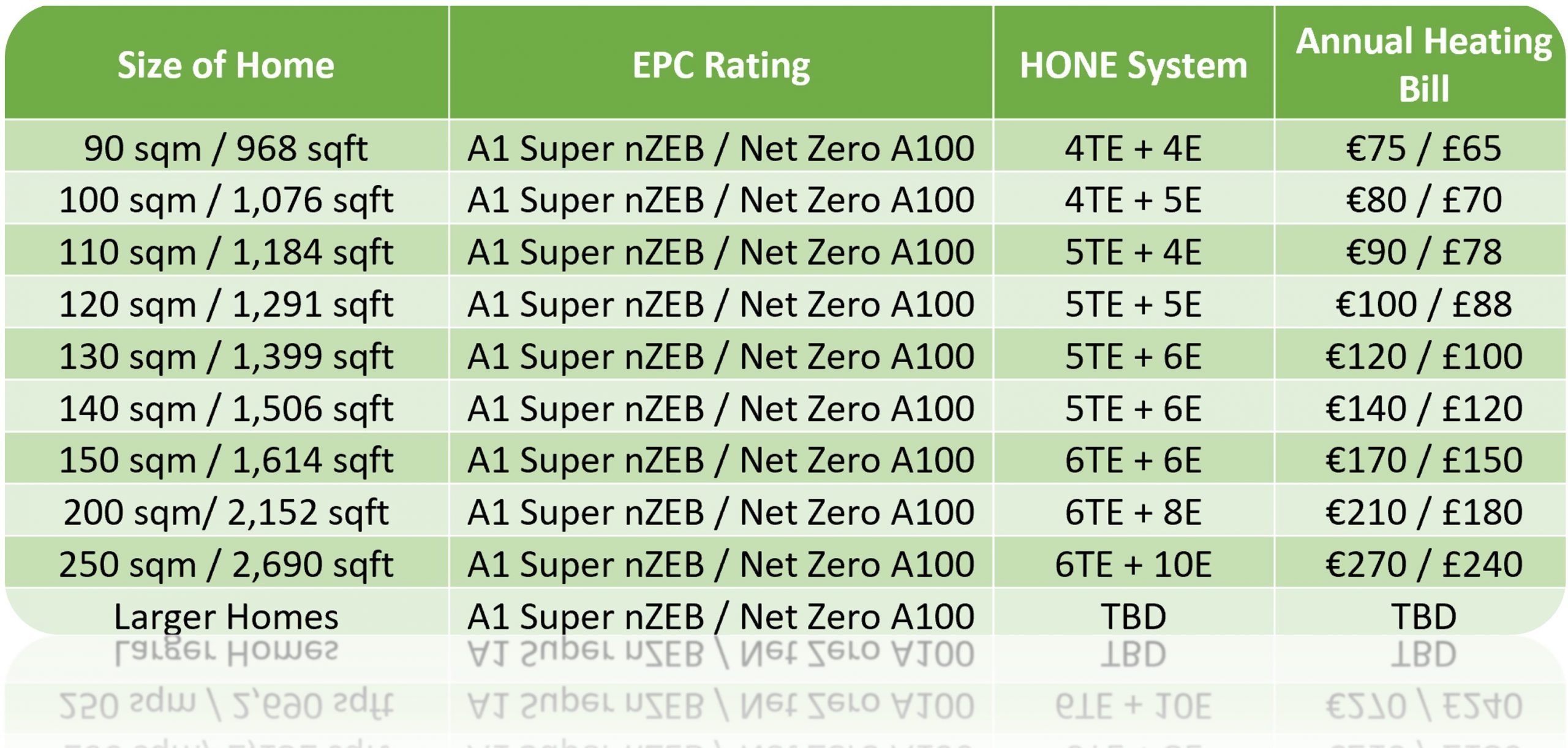
A1 Super nZEB / A100 Net Zero UK - Solutions
This list is of typical HONE system configurations in new build homes where homeowners want to meet the ultimate low-cost home.
Please note that when you send us your energy rating information, we will confirm the Governments determination of what your new electric/heating & hot water bills will be and which HONE system will achieve them.
Drive Options
A HONE Drive system is a renewable electricity system coupled with a car charger. This may be part of an overall HONE Thermal/Electric residential or commercial system for heating, hot water & power.
However, there are critical design considerations for drive systems. Making your own free electricity is worth 60c/kWh (50p) in avoided petrol/diesel purchasing.
To use an example for the explanation, let’s say you install a 6KW basic grid-connected system on your home, typically the largest basic grid-connected system you are allowed to install. It will operate during the day only, and whatever energy you don’t use will be spilt for free or sold to the grid for a low price. Your electric cars may be at work during the day, and you are producing no power when you get home.
However, you could put a battery system on that 6 KW system, but your average daily generation is still only 14 kWh per day. Still, your home will at least use 10 kWh per day on normal electricity consumption, so you are left with an average of 3 kWh spare. That would leave you 16 km a day on average.
The good news is that HONE systems are not restricted in size; we can put any size installation on your home or business. Our drive systems can actually match your EV driving, even if that is 1, 2, 3 or 50 vehicles. At 60c per kWh, you need to make this element a key part of the design as it impacts payback, but only if the systems are big enough.
Basic grid-connected renewable electricity systems between 1KW & 6KW are too small for a future with electricity everything. The future is private grid systems that are not limited by size.
Battery Options
Batteries make sense in larger installations, and you can even charge multiple EV’s at night with your own free electricity.
Installing a battery needs careful design considerations. You may buy a low-performance battery that won’t last long or miss important smart meter functions, such as the ability to download cheap night-rate electricity. Import Export real-time data and historical data is also key. You get what you pay for when it comes to batteries.
All battery systems used in HONE projects are state-of-the-art with 8,000 cycles and 100% depth of discharge, giving them the longest life window of approx 22 years if completely cycled 100% every day but typically above 50 years when cycled at 45%.
If you buy a cheap battery, it will have lower quality material, lower cycle count and depth of discharge. It will expire quicker. Like every industry, you don’t get premium solutions for low prices.
A smart decision with HONE electricity systems is to make it battery ready at installation time, and this is done by adding in an import/export meter option. This means your project is battery ready from day one without having to rewire.
Another important feature of HONE systems is that all the units, inverters, batteries, car chargers, meters, etc., all talk to each other on a single app, even if you decide to add or modify the system in the future.
Smart Panel Heaters
It would be best if you also considered some smart panel heaters which can be run from your free electricity during the day at different times of the year.
Make sure you plug them into a socket using a 3 pin plug and not a spur. The spur will mean they are included in your energy rating as a secondary heat source using electricity, negatively impacting your energy rating. Using 3 pin plugs, they will be closed as occasional heaters and exempt from the rating as electricity is the dirtiest fuel we consume.
Electricity in Ireland typically has 3 times more CO2 emissions than Kerosene, for example.
Note the heater below modulates; this means it does not draw power all the time; it switches on and off and is very efficient. It has a 50% duty cycle, giving heat 100% of the time and only draws power for 50% of the time, making it very efficient. When your HONE system is making free electricity during the day, it will be going into these heaters.
If you choose heaters such as infrared or standard fan heaters, these typically draw power constantly and should be avoided.
The heater below has its own time and temperature control managed from an app on your phone.
Bigger Systems
With HONE systems, renewable electricity or heating/cooling, we can supply “any size system” anywhere.
If you want a 100 MW renewable electricity system on your home or business, then no problem; we can legally design anything you can think of.
This is a speciality engineering area for us.
So if you fancy making your home or business fully or partially off-grid / private grid, with no bills forever, then talk to us about a design no matter what country you are located in.
HONE versus Heat Pumps
The primary difference between HONE and a Heat Pump option is as follows:
- HONE makes free clean, renewable heat & electricity energy, thereby significantly lowering your energy bills. In contrast, a Heat Pump consumes grid electricity, so you are still buying 100% of your energy for heating, hot water & electricity.
- HONE lowers your construction cost, typically by €250 a sqm.
- HONE speeds up your practical completion (typically 2 weeks faster).
- HONE increases the energy rating to an A1 Super nZEB/A100 or even better.
- HONE has practically zero OPEX maintenance requirements versus Heat Pumps with significant maintenance costs (Heat Pumps come with a maintenance plan requiring homeowners to do daily and weekly checks & service engineers to do annual services). Download Heat Pump Maintenace Guide Here
- HONE does not use any harmful materials, unlike Heat Pumps, filled with hydrofluorocarbons (HFCs). Every 10 Kgs of these F-Gases that could leak would release 20 tonnes of CO2 equivalent into the atmosphere. According to BREEAM, a residential heat pump leaks 6% of toxic refrigerant gas a year. A common R410A heat pump refrigerant would equal over 2 Tonnes of Co2 equivalent per year or the equivalent of driving 14 673 km. To give you a benchmark, a modern home is responsible for 1.2 tonnes of CO2 per year.
- HONE is silent, unlike a Heat Pump. READ THIS STORY ABOUT NOISE
- Unlike a HONE system, you will need a backup heat source for times when your heat pump breaks down. When a heat pump loses some of its gas, or you forget the major annual service, the heat pump external unit in cold weather will start freezing up and start taking heat from your house to defrost the outside unit. It will also turn on the auxiliary immersions, thereby costing you lots of money whilst you still potentially have a cold house. If a part goes in your heat pump or is totally degassed, you could be without heat for many days until it is fixed.
- HONE does not require an expensive underfloor heating system (but you may want it, and that is no problem, we can work with that too).
- HONE does not require the expense and time-wasting of pouring a second screed (again, you’ll need it if you want underfloor, and that’s ok).
- HONE does not require the huge and expensive fan-assisted aluminium radiators that you need for a heat pump, see picture below).
- HONE has a 50-year design life; you will have purchased 4 new replacement Heat Pumps in that period.
- HONE can be deployed from the smallest terraced house to the largest apartment complex easily.
- HONE systems are modular and fully expandable.
- HONE does not require an enhanced electricity connection, unlike a Heat Pump.
- HONE increases the sales value of the property significantly.
- HONE systems are 100% recyclable.

Running Costs - HONE versus Heat Pump
With a heat pump, you will have to purchase 100% of your heating, hot water & electricity; it really is that simple.
With HONE, we will make a significant amount of your heat and electricity, reducing your bills by 80%-90% typically versus a heat pump in a HONE A1 Super nZEB home.
If you go further with a HONE A1 Net Zero or HONE A1 PEB home solution, you can virtually zero your annual energy bills.
HONE is also much cheaper to install.
Financials including OPEX
HONE systems have a simple 5-year service requirement which is typically €300 for fluid service. Heat Pumps have to be checked each day, week and a significant service costing typically €900 a year needs to be completed. If you don’t do these services to Heat Pumps, the efficiency of your heat pump will fall away, and your electricity bills will increase.
In Ireland (UK), a HONE system meeting an A1 Super nZEB rating where your home is valued at 10% more will save you up to 19% of your construction cost.
If your construction cost is €300,000, we will save you €57,000 in construction costs with HONE as your energy platform for an A1 Super nZEB.
You would save €48,000 in construction costs for a HONE home with a Net Zero rating.
You would save €40,800 in construction costs for a HONE home with a PEB rating (Positive Energy Building)
Large developments
HONE can be deployed in large developments like a normal house and multi-res apartment complexes using centralised thermal/electricity systems.
This significantly reduces the cost of meeting nZEB and delivers exceptionally low energy bills for tenants.
The M&E cost per apartment is significantly reduced versus a heat pump, and the ongoing OPEX costs collapse.
This also increases the value of each unit due to the higher energy ratings achieved with HONE solutions.
Types of backup heating
The backup heat source in a new build home for the small amount of heating needed when you have a HONE system can be anything, but we typically recommend a micro oil or gas boiler as the installation & servicing costs are low.
More importantly, however, these options have the lowest emissions of any fuel option right now, about one-third of the emissions compared to electricity. This will be the case for the foreseeable future.
Next Generation of Heating
The current use of gas and kerosene will be with us for years to come, and prices are set to drop as electricity is pushed as a dominant heat source by Government.
However, new biofuel replacements for kerosene are in development and will likely mean you re-jet your oil boiler and go green.
Gas boiler users already have green gas, a 100% renewable gas available in a large tank format. Gas boiler owners will be able to convert to Green Hydrogen Gas (H2) from 2025 onwards. This gas is made from local renewable energy and water, the H2 in H2O.
There are lots of options coming which are cheaper, less costly to install. And, yes, they will mean you have low energy bills, and this will mean Government lose significant amounts of taxation they are used to collecting from you.
What if I do nothing?
If you do nothing, you face a future of significant electricity bills; by 2030, electric heating, 2 x electric cars and your normal electricity will be a serious monthly bill making your mortgage pale in comparison.
Don’t forget the billions in capital investments spent enhancing the grid for heat pumps and electric cars, which will be charged to electricity users.
Act early, and you can avoid this future; let us help you plot a course away from this scenario.
Carbon Emissions
HONE solutions achieve the lowest carbon emissions over any other option available.
HONE Thermal/Electric dual-energy panels have the worlds highest performance rating and, as such, the world’s best emissions reduction values.
HONE can easily deliver zero-carbon, net-zero carbon and 100% no carbon energy outcomes, which no other technology can achieve.
This is why HONE systems deliver the best Energy Ratings of any other alternative and why Europe’s & Ireland’s best energy rated home is powered by HONE Thermal/Electric Technology. (and it is a 2006 retrofit concrete block home)
Some trade secrets for your project
Here are some secrets of doing your project even better:
- Add an MHRV extract duct inside your hot press. HONE thermal systems are very powerful, and the hot press/room the HONE cylinder is placed in can typically average 30C to 50C. By placing an extract duct (the same as your wet rooms), you will feed all this free heat into your MHRV system, and it will spread it around the house for free.
- Lay electric heating floor mats in the tiled bathrooms; these also have time/temperature control and controlled by your smart devices. When you want a luxurious experience, crank it up to 30C. If you operate it during the day when you are making your own free electrical energy, the tiles will hold the heat for up to 20 hours, so you get the benefit long into the night.
- Don’t mount your car charger on a wall outside a bedroom; they have a very slight hum, and the very quiet vibrations may be felt or heard inside the bedroom wall.
Retrofit Residential
This is a simple explanation of what HONE technology means to retrofit residential projects
My house is old, what can I do?
Regardless of which type of energy you require HONE to deliver, you will have a leading performance with the highest certified outputs per sqm as a significant benefit.
This means you can deliver large amounts of renewable energy from winter to summer. In fact, the thermal performance of HONE can be higher in December & January than traditional solar thermal in summer.
See the technical FAQ for the more detailed performance section.
We also publish performance data on our Twitter account – Click Here
What we need from you
What is a HONE Retrofit nZEB system?
Whilst a new build may be a straightforward project, a retrofit needs careful planning.
You want a solution for your whole house; this may involve windows, ventilation, energy, electric car charging.
There are so many options for retrofit, but they all fall under the banner of Heat, Power & Drive. These are the three energy costs/requirements you will have in the future.
Once you have an Energy Rating completed on your home, we can look at all the detail and best advise you from there.
Don’t forget renovations to homes now fall under nZEB by law since Dec 31st 2020 across Europe.
As with a new build, you can have any energy rating outcome you want on a retrofit; tell us, and we will design a specification just for your home.
Don’t forget that Europe’s & Ireland’s best energy rated home is a retrofit 2006 concrete home which was E1 Energy Rated. With some smart planning in the right places, it is now the exemplar retrofit project in Europe.
(The European Commission funded the peer review of the data on this project)
Case Studies
Please read the information in all these sections first.
Then, if you are looking for very detailed technical and regulatory information for a retrofit residential or a multi-res development, you can read the technical detail in the Case Study section.
Social & Affordable Housing
HONE is ideal for social and affordable housing retrofitting with new low annual heating bills certified by DEAP and SAP evidence.
Upgrading or retrofitting a home is extremely straightforward using HONE systems, no matter how small or dense the development.
The upgrade cost is lower, and the time scale for the upgrade is rapid.
See the case study for 10 social & affordable homes with C1 ratings upgraded with HONE systems to A1 Energy Ratings with minimal intervention in the home.
Drive Options
A HONE Drive system is a renewable electricity system coupled with a car charger. This may be part of an overall HONE Thermal/Electric residential or commercial system for heating, hot water & power.
However, there are critical design considerations for drive systems. Making your own free electricity is worth 60c/kWh (50p) in avoided petrol/diesel purchasing.
To use an example for the explanation, let’s say you install a 6KW basic grid-connected system on your home, typically the largest basic grid-connected system you are allowed to install. It will operate during the day only, and whatever energy you don’t use will be spilt for free or sold to the grid for a low price. Your electric cars may be at work during the day, and you are producing no power when you get home.
However, you could put a battery system on that 6 KW system, but your average daily generation is still only 14 kWh per day. Still, your home will at least use 10 kWh per day on normal electricity consumption, so you are left with an average of 3 kWh spare. That would leave you 16 km a day on average.
The good news is that HONE systems are not restricted in size; we can put any size installation on your home or business. Our drive systems can actually match your EV driving, even if that is 1, 2, 3 or 50 vehicles. At 60c per kWh, you need to make this element a key part of the design as it impacts payback, but only if the systems are big enough.
Basic grid-connected renewable electricity systems between 1KW & 6KW are too small for a future with electricity everything. The future is private grid systems that are not limited by size.
Battery Options
Batteries make sense in larger installations, and you can even charge multiple EV’s at night with your own free electricity.
Installing a battery needs careful design considerations. You may buy a low-performance battery that won’t last long or miss important smart meter functions, such as the ability to download cheap night-rate electricity. Import Export real-time data and historical data is also key. You get what you pay for when it comes to batteries.
All battery systems used in HONE projects are state-of-the-art with 8,000 cycles and 100% depth of discharge, giving them the longest life window of approx 22 years if completely cycled 100% every day but typically above 50 years when cycled at 45%.
If you buy a cheap battery, it will have lower quality material, lower cycle count and depth of discharge. It will expire quicker. Like every industry, you don’t get premium solutions for low prices.
A smart decision with HONE electricity systems is to make it battery ready at installation time, and this is done by adding in an import/export meter option. This means your project is battery ready from day one without having to rewire.
Another important feature of HONE systems is that all the units, inverters, batteries, car chargers, meters, etc., all talk to each other on a single app, even if you decide to add or modify the system in the future.
Smart Panel Heaters
It would be best if you also considered some smart panel heaters which can be run from your free electricity during the day at different times of the year.
Make sure you plug them into a socket using a 3 pin plug and not a spur. The spur will mean they are included in your energy rating as a secondary heat source using electricity, negatively impacting your energy rating. Using 3 pin plugs, they will be closed as occasional heaters and exempt from the rating as electricity is the dirtiest fuel we consume.
Electricity in Ireland typically has 3.5 times more CO2 emissions than Kerosene, for example.
Note the heater below modulates; this means it does not draw power all the time; it switches on and off and is very efficient. It has a 50% duty cycle, giving heat 100% of the time and only draws power for 50% of the time, making it very efficient. When your HONE system is making free electricity during the day, it will be going into these heaters.
If you choose heaters such as infrared or standard fan heaters, these typically draw power constantly and should be avoided.
The heater below has its own time and temperature control managed from an app on your phone.
Bigger Systems
With HONE systems, renewable electricity or heating/cooling, we can supply “any size system” anywhere.
If you want a 100 MW renewable electricity system on your home or business, then no problem; we can legally design anything you can think of.
This is a speciality engineering area for us.
So if you fancy making your home or business fully or partially off-grid / private grid, with no bills forever, then talk to us about a design no matter what country you are located in.
HONE versus Heat Pumps
The primary difference between HONE and a Heat Pump option is as follows:
- HONE makes free clean, renewable heat & electricity energy, thereby significantly lowering your energy bills. In contrast, a Heat Pump consumes grid electricity, so you are still buying 100% of your energy for heating, hot water & electricity.
- HONE lowers your construction cost, typically by €250 a sqm.
- HONE speeds up your practical completion (typically 2 weeks faster).
- HONE increases the energy rating to an A1 Super nZEB/A100 or even better.
- HONE has practically zero OPEX maintenance requirements versus Heat Pumps with significant maintenance costs (Heat Pumps come with a maintenance plan requiring homeowners to do daily and weekly checks & service engineers to do annual services). Download Heat Pump Maintenace Guide Here
- HONE does not use any harmful materials, unlike Heat Pumps, filled with hydrofluorocarbons (HFCs). Every 10 Kgs of these F-Gases that could leak would release 20 tonnes of CO2 equivalent into the atmosphere. According to BREEAM, a residential heat pump leaks 6% of toxic refrigerant gas a year. A common R410A heat pump refrigerant would equal over 2 Tonnes of Co2 equivalent per year or the equivalent of driving 14 673 km. To give you a benchmark, a modern home is responsible for 1.2 tonnes of CO2 per year.
- HONE is silent, unlike a Heat Pump. READ THIS STORY ABOUT NOISE
- Unlike a HONE system, you will need a backup heat source for times when your heat pump breaks down. When a heat pump loses some of its gas, or you forget the major annual service, the heat pump external unit in cold weather will start freezing up and start taking heat from your house to defrost the outside unit. It will also turn on the auxiliary immersions, thereby costing you lots of money whilst you still potentially have a cold house. If a part goes in your heat pump or is totally degassed, you could be without heat for many days until it is fixed.
- HONE does not require an expensive underfloor heating system (but you may want it, and that is no problem, we can work with that too).
- HONE does not require the expense and time-wasting of pouring a second screed (again, you’ll need it if you want underfloor, and that’s ok).
- HONE does not require the huge and expensive fan-assisted aluminium radiators that you need for a heat pump, see picture below).
- HONE has a 50-year design life; you will have purchased 4 new replacement Heat Pumps in that period.
- HONE can be deployed from the smallest terraced house to the largest apartment complex easily.
- HONE systems are modular and fully expandable.
- HONE does not require an enhanced electricity connection, unlike a Heat Pump.
- HONE increases the sales value of the property significantly.
- HONE systems are 100% recyclable.
What if I swapped my oil boiler for a heat pump?
What is an insulation Tea Cosy?
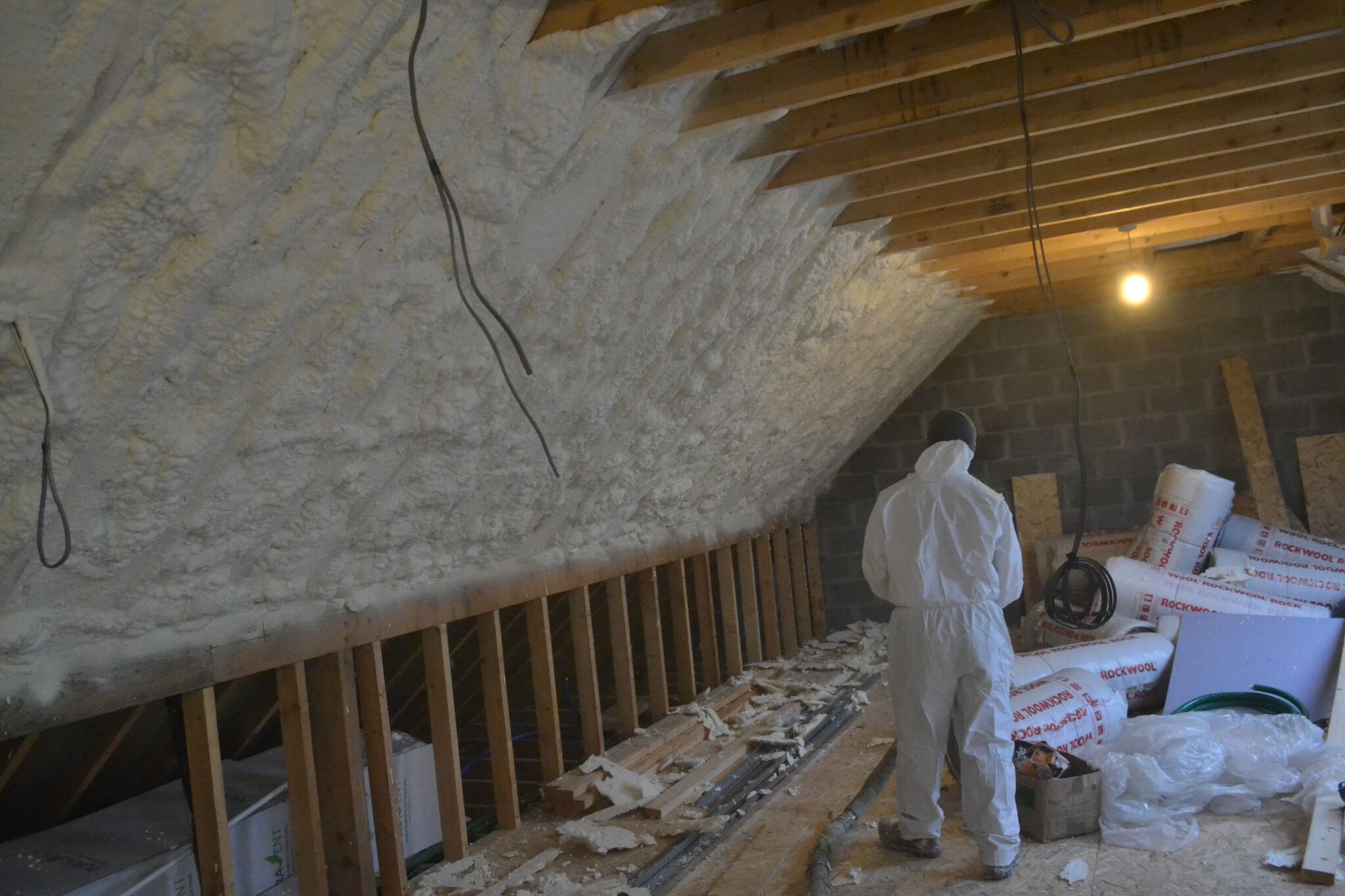
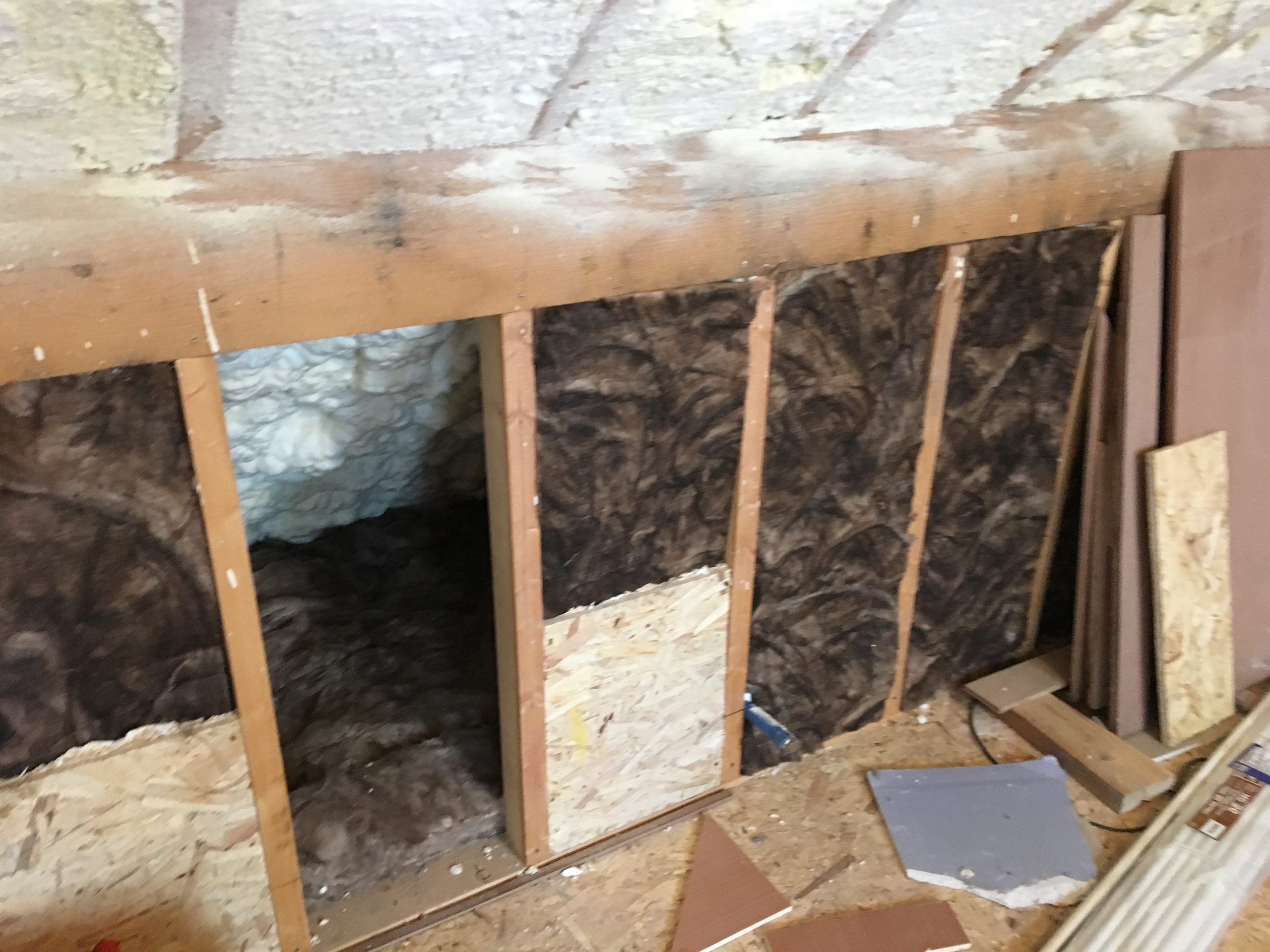
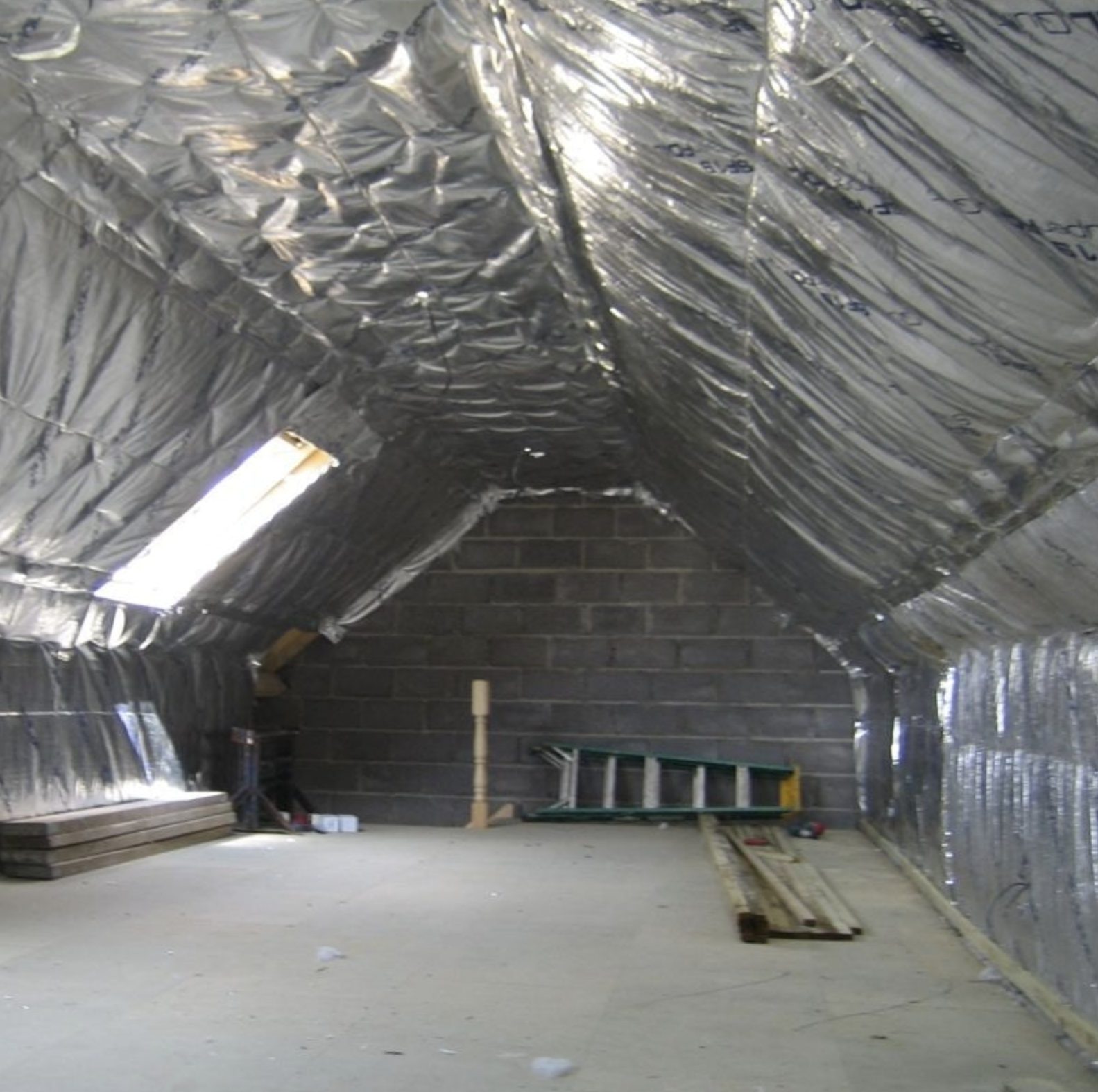
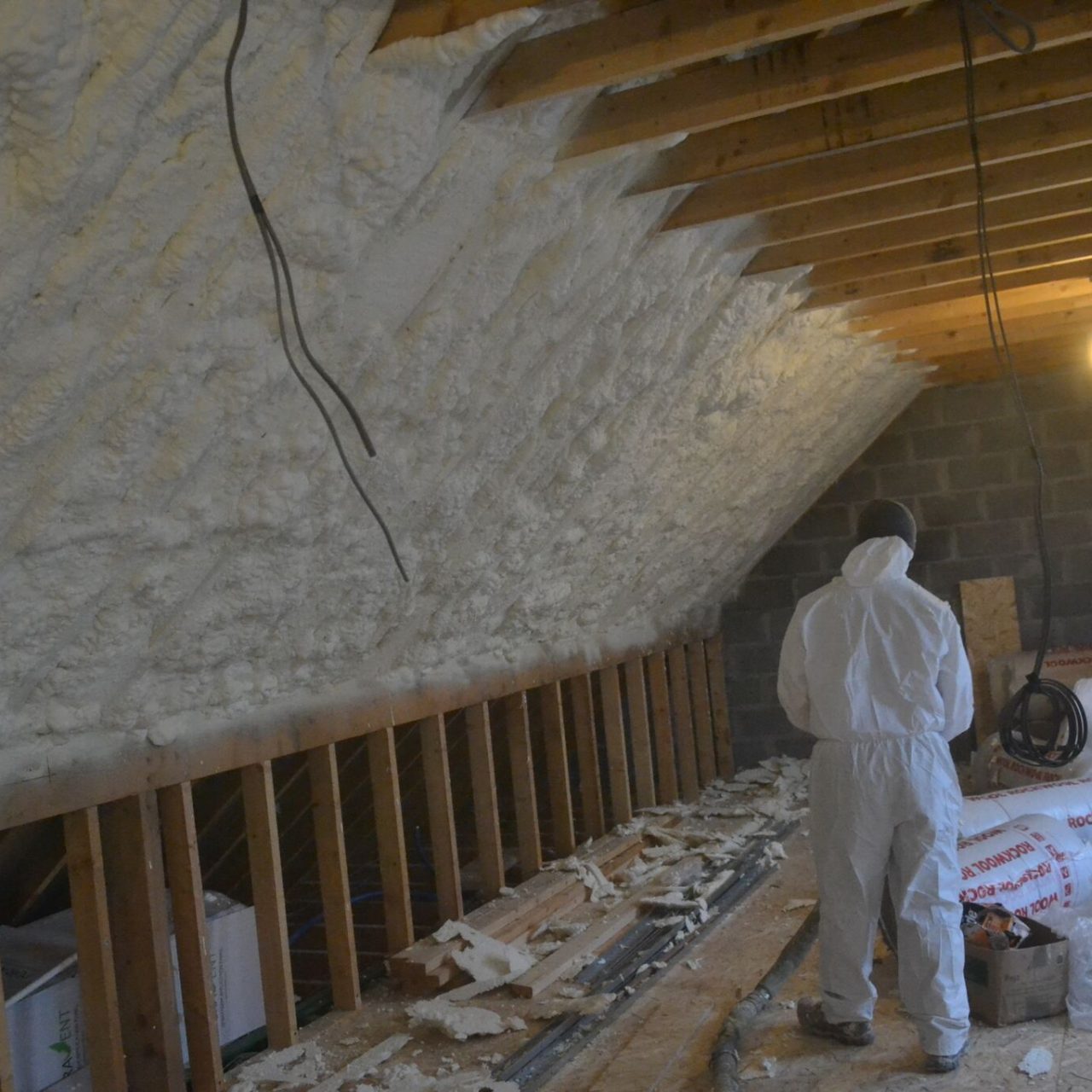
An insulation tea cosy is where you place insulation in your roof space/attic as if it was acting like a tea cosy.
It involves doing “insulation on rafter” in a certain way. You cannot do this with “insulation on ceiling”. You insulate on Rafter, then make it airtight, and it is transformational in existing homes the level of comfort that comes with this approach. (please see our case study E1 to A2 nZEB where there more detail on this upgrade)
You make the upper roof segment airtight, which stops the heat from going up your inner walls downstairs. This has significant impacts on the comfort of your house and your energy bills.
An example of this would be to foam your attic all the way down to the soffit (with rear ventilation behind the foam) and then use a product like Superquilt foil, which you can tape the joints and create an airtight structure.
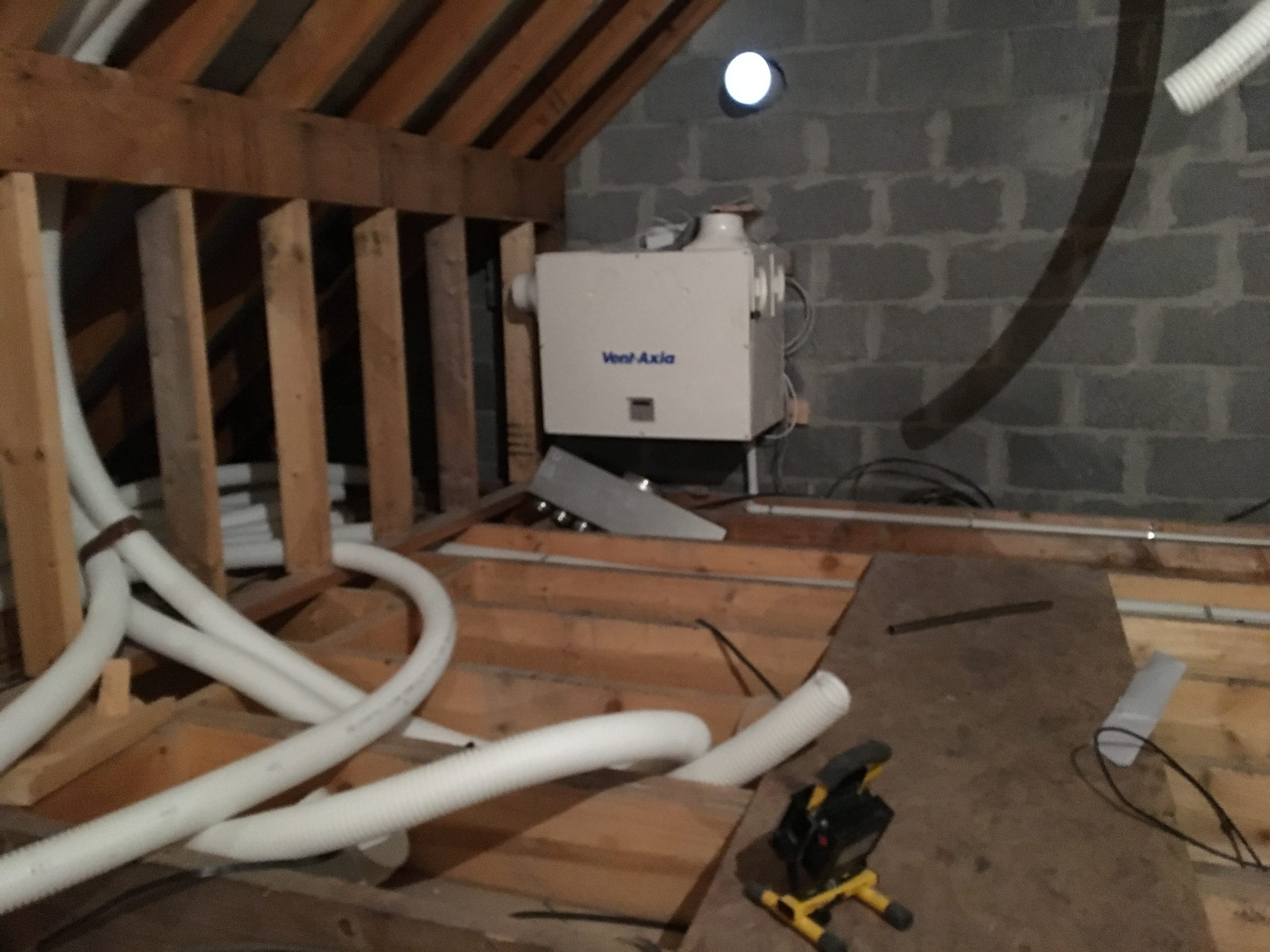
This closes off heat loss for your attic. This insulation method is easy to do and is highly effective on retrofit homes, completely changing the heat loss. Couple this with an MHRV system, and you can install rigid pipes first and then foam them into place. Then, you close all the air vents, permanently seal them, and remove your chimney below the roof tiles.
These measures alone will lower your heating bills by 70% in a retrofit home.
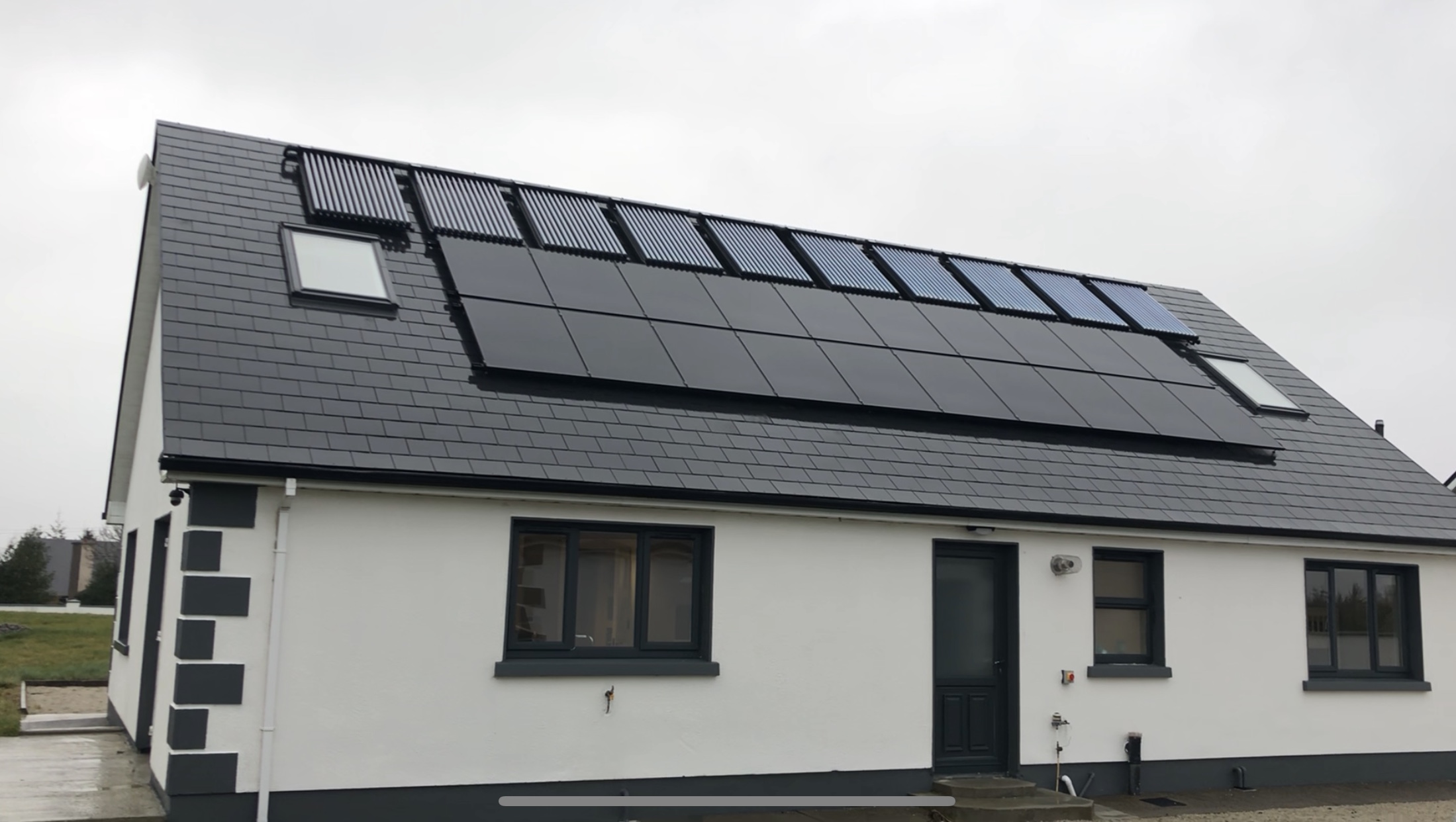
Then add in a HONE Heat, Power & Drive system, and you’ll go all the way to an A2 nZEB Retrofit with heating oil bills down to €300-€400 a year with most of your hot water and electricity made free on your roof.

Running Costs - HONE versus Heat Pump
With a heat pump, you will have to purchase 100% of your heating, hot water & electricity; it really is that simple. It does not matter whether it is a new build, retrofit project or a hotel.
With HONE, we will make a significant amount of your heat and electricity, reducing your bills by 80%-90% typically versus a heat pump in a HONE A1 Super nZEB home.
If you go further with a HONE A1 Net Zero or HONE A1 PEB solution, you can virtually zero your annual energy bills.
HONE is also much cheaper to install.
Financials including OPEX
HONE systems have a simple 5-year service requirement which is typically €300 for fluid service. Heat Pumps have to be checked each day, week and a significant service costing typically €900 a year needs to be completed. If you don’t do these services to Heat Pumps, the efficiency of your heat pump will fall away, and your electricity bills will increase.
Retrofit homes would need significant fabric investments for heat pumps; SEAI quote potentially €40,000 of home fabric upgrades before you would be eligible to apply for a Heat Pump grant, which means the heat pump installation cost is in addition.
In addition, with a heat pump, you will only get a B2 energy rating. You will still have to buy 100% of your heat, hot water & electricity.
HONE systems deliver 100% free renewable energy into the home, with significantly lower retrofit costs in comparison and can easily get you an A1 or Net Zero rating even on a retrofit. You will also have 80%-90% lower annual energy bills versus a heat pump.
With a HONE solution, you can make most of your heat & electricity energy for free on your own roof.
Large Development Refurbishments
Refurbishing a single house or a large development using HONE is very straightforward.
See our case study section for examples.
Types of backup heating
The backup heat source in a new build home for the small amount of heating needed when you have a HONE system can be anything, but we typically recommend a micro oil or gas boiler as the installation & servicing costs are low. It also has the lowest emissions and annual fuel bills. In the near future, you can switch to whichever are the best green option emerges.
Next Generation of Heating
The current use of gas and kerosene will be with us for years to come, and prices are set to drop as electricity is pushed as a dominant heat source by Government.
However, new biofuel replacements for kerosene are in development and will likely mean you re-jet your oil boiler and go green.
Gas boiler users already have green gas, a 100% renewable gas available in a large tank format. Gas boiler owners will be able to convert to Green Hydrogen Gas (H2) from 2025 onwards. This gas is made from local renewable energy and water, the H2 in H2O.
There are lots of options coming which are cheaper, less costly to install. And, yes, they will mean you have low energy bills, and this will mean Government lose significant amounts of taxation they are used to collecting from you.
What if I do nothing?
If you do nothing, you face a future of significant electricity bills; by 2030, electric heating, 2 x electric cars and your normal electricity will be a serious monthly bill making your mortgage pale in comparison.
Don’t forget the billions in capital investments spent enhancing the grid for heat pumps and electric cars, which will be charged to electricity users.
Act early, and you can avoid this future; let us help you plot a course away from this scenario.
Carbon Emissions
HONE solutions achieve the lowest carbon emissions over any other option available.
HONE Thermal/Electric dual-energy panels have the worlds highest performance rating and, as such, the world’s best emissions reduction values.
HONE can easily deliver zero-carbon, net-zero carbon and 100% no carbon energy outcomes, which no other technology can achieve.
This is why HONE systems deliver the best Energy Ratings of any other alternative and why Europe’s & Ireland’s best energy rated home is powered by HONE Thermal/Electric Technology. (and it is a 2006 retrofit concrete block home)
Some trade secrets for your project
Here are some secrets of doing your project even better:
- Add an MHRV extract duct inside your hot press. HONE thermal systems are very powerful, and the hot press/room the HONE cylinder is placed in can typically average 30C to 50C. By placing an extract duct (the same as your wet rooms), you will feed all this free heat into your MHRV system, and it will spread it around the house for free.
- Lay electric heating floor mats in the tiled bathrooms; these also have time/temperature control and controlled by your smart devices. When you want a luxurious experience, crank it up to 30C. If you operate it during the day when you are making your own free electrical energy, the tiles will hold the heat for up to 20 hours, so you get the benefit long into the night.
- Don’t mount your car charger on a wall outside a bedroom; they have a very slight hum, and the very quiet vibrations may be felt or heard inside the bedroom wall.
Commercial
New or Retrofit Projects
This section details the commercial options on solutions.
Commercial Projects
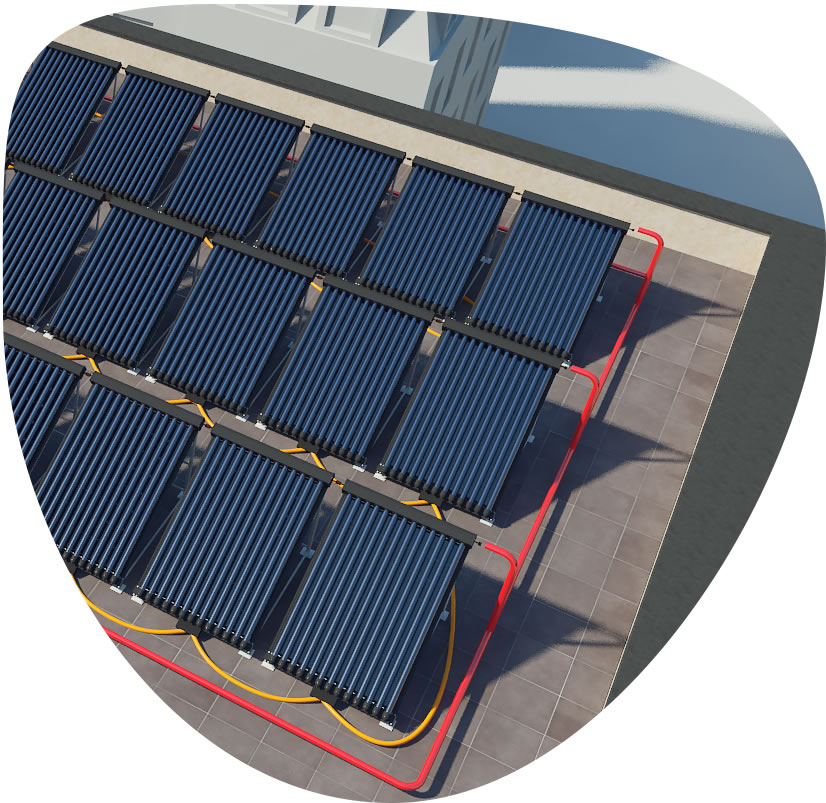
HONE systems in commercial projects can be simple or very complex. The buildings can be factories, leisure centre, hospitals or apartment blocks.
Whatever the project, we have a solution for it.
Contact us to discuss your project in more detail.
KEEP UP TO DATE WITH HONE
Subscribe to Our Newsletter
Sign up for the HONE newsletter to receive all the new offers and new information updates. Simply type in your email address and we’ll include you in our next update.
KEEP UP TO DATE WITH HONE
Subscribe to
Our Newsletter
Sign up for the HONE newsletter to receive all the new offers and new information updates. Simply type in your email address and we’ll include you in our next update.